
Navigating men’s dress shirt sizing can be tricky, as variations exist between brands and fits.
Understanding key measurements—neck, chest, and sleeve length—is crucial for a polished appearance.
Accurate sizing ensures comfort and a professional silhouette, avoiding issues like tightness or gaping.
Online shopping requires careful attention to product-specific measurements and customer feedback.
O’Neill shirts, for example, often run tighter, suggesting sizing up for a comfortable fit.
Always consult size charts, considering height and weight for optimal results.
Why Accurate Sizing Matters
Properly fitted dress shirts are foundational to a man’s wardrobe, significantly impacting overall appearance and confidence. A well-fitted shirt complements your physique, creating a streamlined and polished look, while an ill-fitting one can detract from even the most expensive suit.
Beyond aesthetics, accurate sizing ensures comfort throughout the day. A shirt that’s too tight restricts movement and can be uncomfortable, especially during extended wear. Conversely, a shirt that’s too loose appears sloppy and unprofessional.
Considering that brands like O’Neill often have a tighter fit, understanding sizing nuances is vital. Precise measurements—neck, chest, and sleeve length—are essential to avoid returns and frustration, ultimately saving time and money. Investing in correctly sized shirts demonstrates attention to detail.
Understanding Different Brands & Fits
Men’s dress shirt sizing isn’t standardized; significant variations exist between manufacturers. What constitutes a “medium” at one brand may differ considerably from another. O’Neill, for instance, is noted for a generally tighter fit in their henleys and polos, necessitating potential sizing up.
Furthermore, shirt fits—slim, regular, classic, and modern—influence sizing. Slim fit shirts are cut closer to the body, requiring a more precise measurement, while classic fits offer more room. Modern fits strike a balance.
Always consult each brand’s specific size chart, paying attention to detailed measurements like chest and sleeve length. Product pages often provide exact garment dimensions, aiding in accurate selection. Ignoring these nuances can lead to ill-fitting shirts and unnecessary returns.

Key Measurements for Dress Shirts
Essential measurements—neck, chest, sleeve length, and shoulder width—are vital for a well-fitted dress shirt. Accurate measurements guarantee both comfort and a polished look.
Neck circumference dictates collar size, while chest measurement influences body fit. Sleeve length ensures proper cuff positioning.
Neck Size: How to Measure
Determining your neck size is the foundational step in finding the right dress shirt fit. Use a flexible measuring tape, and ensure your shoulders are relaxed, not hunched or pulled back. Position the tape measure comfortably around the base of your neck, where the collar naturally sits.
Keep the tape level and snug, but not constricting – you should be able to comfortably slide a finger between the tape and your neck. Read the measurement in inches. This number typically corresponds directly to your collar size. For example, a 15-inch neck measurement usually requires a 15-inch collar size.
It’s crucial to measure accurately, as an incorrect neck size can lead to discomfort and a poorly fitting shirt. If your measurement falls between sizes, it’s generally recommended to size up for a more comfortable fit, especially with brands known for tighter fits like O’Neill.
Chest Size: Accurate Measurement Techniques
Accurately measuring your chest is vital for a comfortable and well-fitting dress shirt. Have a friend assist for the most precise results. Stand naturally with your arms relaxed at your sides, and breathe normally – don’t suck in your stomach or puff out your chest.
Wrap a flexible measuring tape around the fullest part of your chest, typically across the nipples and shoulder blades. Ensure the tape is level all the way around your body and isn’t too tight. Record the measurement in inches.
Compare your chest measurement to the brand’s size chart. Remember that chest size often dictates the overall shirt size (S, M, L, etc.). Consider that some brands, like O’Neill, may run tighter, potentially requiring you to size up from your typical measurement.
Sleeve Length: Determining the Right Fit
Determining the correct sleeve length ensures a polished and professional look. Measure from the center back of your neck, over your shoulder, and down to your wrist bone. Keep your arm slightly bent during measurement.
Sleeve lengths are often indicated numerically in inches or by letter codes (S, M, L, XL). A properly fitted sleeve should allow approximately ½ inch of shirt cuff to extend beyond your jacket sleeve.
Online product pages frequently provide exact sleeve length measurements from the center back. Pay close attention to these details, as variations exist between manufacturers. If unsure, it’s generally better to err on the side of slightly longer sleeves, as they can be easily altered.
Shoulder Width: Importance for Shirt Shape
Shoulder width significantly impacts a dress shirt’s overall fit and silhouette. It dictates how the shirt drapes across your upper back and chest, influencing comfort and appearance.
A proper fit ensures the shoulder seams lie flat and align with the natural edge of your shoulders – not extending beyond or feeling constricted. Incorrect shoulder width can cause bunching, pulling, or a generally ill-fitting garment.
While not always explicitly listed on size charts, shoulder width is implicitly considered within overall chest and sleeve measurements. Consider this when reviewing product details and prioritize shirts with detailed sizing information.
Standard Men’s Shirt Sizes
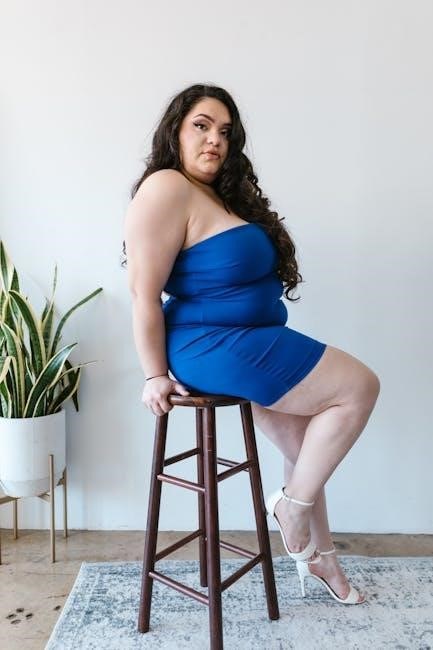
Common men’s shirt sizes typically range from 14.5 to 17.5 inches for neck size, with sleeve lengths denoted numerically or by letters (S, M, L).
Chest size correlates to these measurements, influencing the overall fit and comfort of the shirt.
Neck Sizes: Common Ranges & Variations
Standard neck sizes for men’s dress shirts generally fall within a range of 14.5 inches to 17.5 inches, though variations exist. Measuring accurately is paramount; use a flexible tape measure, ensuring it sits comfortably but not tightly around the base of your neck.
Increments are typically in half-inch intervals (e.g., 15, 15.5, 16). Some brands may offer extended sizes beyond this range to accommodate a wider spectrum of body types. It’s crucial to remember that neck size directly impacts collar fit, influencing comfort and appearance.
A too-tight collar restricts movement and looks unflattering, while a too-loose collar appears sloppy. Consider your build; broader shoulders may necessitate a slightly larger neck size even if your measured neck circumference suggests otherwise. Always consult the specific brand’s size chart, as sizing can differ significantly.
Sleeve Lengths: Numerical and Letter Codes
Sleeve length is typically indicated in inches, ranging from 30 inches to 37 inches, or by letter codes like S (small), M (medium), L (large), XL (extra-large), and beyond. To measure, start at the center back of your neck and run the tape measure down your shoulder to your wrist bone.
A properly fitted sleeve allows approximately ½ to ¾ of an inch of shirt cuff to extend beyond your jacket sleeve. Variations exist; some prefer more or less cuff exposure. Letter codes are less precise, so referencing a brand’s specific size chart is vital.
Consider your arm length and build; taller individuals generally require longer sleeves. Incorrect sleeve length impacts overall proportion and can make a shirt appear ill-fitting. Always prioritize accurate measurement for a polished and professional look;
Chest Sizes & Corresponding Shirt Sizes
Chest size is a primary determinant of dress shirt fit. Measure around the fullest part of your chest, keeping the tape measure level and comfortably snug. Common chest sizes range from 36 inches to 56 inches, correlating to shirt sizes from 14.5 to 24.5 (approximately).
However, this correlation isn’t absolute; brands vary. A 40-inch chest might correspond to a size 15 or 15.5, depending on the cut (slim, regular, classic). Always consult the specific brand’s size chart.
Ensure sufficient room for comfortable movement, especially when buttoning the shirt. A shirt that strains across the chest is too small, while excessive fabric indicates a size too large. Prioritize a balanced fit for both comfort and appearance.
Types of Shirt Fits & Their Sizing Implications
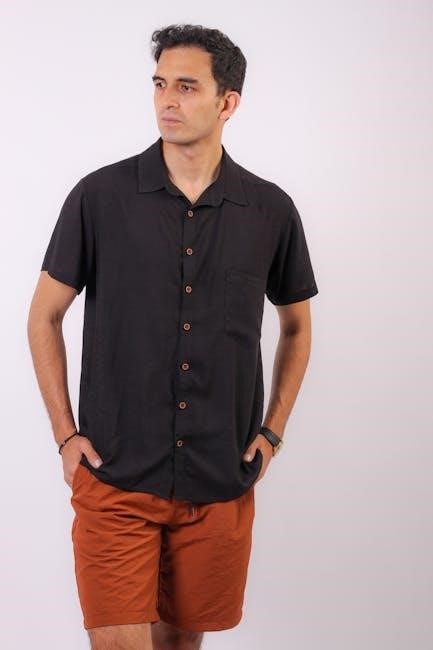
Different shirt fits—slim, regular, classic, and modern—impact sizing. Slim fits require precise measurements, while classic fits offer more leeway.
Understanding these nuances is key.
Slim Fit Shirts: Sizing Considerations
Slim fit shirts are designed to closely follow the body’s shape, requiring a more precise fit than other styles. Because of this tailored silhouette, accurate measurements are paramount; a slight miscalculation can lead to discomfort or an unflattering appearance.
Generally, individuals opting for slim fit shirts may need to size up, particularly if they possess a broader chest or shoulders. It’s crucial to carefully review the brand’s specific size chart, as slim fit definitions vary. Pay close attention to chest and shoulder measurements, ensuring they align with the shirt’s specifications.
Consider that slim fit shirts often have less fabric allowance, meaning there’s minimal room for movement. If you’re between sizes, it’s often advisable to choose the larger size to avoid feeling constricted. Remember, O’Neill shirts, as noted, tend to run tighter, reinforcing the need for potential sizing adjustments.
Regular Fit Shirts: Standard Sizing
Regular fit shirts offer a classic, comfortable silhouette with more room throughout the chest, waist, and shoulders. This style is generally the most forgiving in terms of sizing, making it a good starting point for those unsure of their measurements.
Standard sizing typically aligns with neck and sleeve length, with chest size influencing the overall fit. Referencing a comprehensive size chart is still recommended, but regular fit shirts generally allow for a bit more flexibility.
Unlike slim fit options, you likely won’t need to size up unless you fall between sizes or prefer a looser feel. Ensure the shoulder seams sit correctly and the shirt doesn’t pull when buttoned. Considering O’Neill’s tendency towards a tighter fit, a standard size might be preferable.
Classic Fit Shirts: Looser Sizing Guidelines
Classic fit shirts provide the most generous cut, offering ample room in the chest, waist, and body. Sizing for this style prioritizes comfort and ease of movement, making it ideal for those who prefer a relaxed silhouette.
When selecting a classic fit shirt, you may consider sizing down if you prefer a slightly more tailored look, but generally, sticking to your measured size is advisable. Pay attention to shoulder width to avoid a boxy appearance.
Given that some brands, like O’Neill, tend to run smaller, a classic fit could compensate for that, providing a comfortable and non-restrictive experience. Always check specific product measurements for the most accurate fit.
Modern Fit Shirts: A Balanced Approach
Modern fit shirts strike a balance between slim and regular fits, offering a tailored look without excessive tightness. They are cut closer to the body than classic fits but provide more room than slim fits, accommodating a broader range of body types.
Sizing for modern fit shirts generally aligns with standard measurements, but it’s wise to consider the brand. If a brand, such as O’Neill, is known for running small, opting for one size up might be beneficial.
Focus on a comfortable fit across the chest and shoulders, ensuring sufficient movement without appearing overly loose. Checking product-specific measurements is crucial for a precise fit.
Brand-Specific Sizing Charts
Each manufacturer employs unique sizing standards; therefore, consulting brand-specific charts is essential.
O’Neill, for instance, provides detailed charts correlating height, weight, and corresponding sizes (2XS to 5XL).
O’Neill Men’s Shirt Size Chart Overview
O’Neill’s sizing charts are comprehensive, offering guidance based on both height and weight, alongside standard sizes. Their charts typically span from 2XS to 5XL, catering to a broad range of body types. For a 2XS, the height range is 168-173cm with a weight of 52-59kg. Moving up, an XS fits individuals 170-175cm tall, weighing 57-64kg.
A size Small suits those 173-178cm in height and 61-70kg, while Medium accommodates individuals 175-180cm tall and weighing 70-79kg. These charts aren’t merely about chest measurements; they consider overall body proportions for a better fit. It’s crucial to meticulously compare your measurements against O’Neill’s specific guidelines to avoid incorrect sizing, especially when ordering online.
Remember to utilize the provided sleeve length and neck size information alongside height and weight for the most accurate selection. O’Neill’s commitment to detailed sizing helps ensure a comfortable and stylish fit for every customer.
Analyzing Size Charts for Different Manufacturers
Discrepancies in sizing are common across menswear brands; a size Medium in one brand may not equate to the same fit in another. Thoroughly analyzing each manufacturer’s size chart is paramount. Some brands prioritize slim fits, requiring a size up, while others lean towards a more relaxed, classic cut.
Pay close attention to the specific measurements listed – neck, chest, sleeve length, and shoulder width – rather than relying solely on the size label. Note whether the chart uses inches or centimeters, and convert accordingly. Customer reviews often provide valuable insights into a brand’s sizing tendencies, highlighting whether items run large or small.
Comparing your body measurements to multiple charts before purchasing minimizes the risk of ordering an ill-fitting shirt. Don’t hesitate to consult the brand’s customer service for clarification if the chart is unclear.

International Size Conversions
Converting shirt sizes internationally requires attention, as US sizes differ from UK and European standards. Utilize conversion charts for accurate results when shopping globally.
Understanding these variations ensures a proper fit, regardless of the country of origin for the garment.
US to UK Shirt Size Conversion
Converting US men’s shirt sizes to UK sizes isn’t always straightforward, but a general guideline exists. Typically, a US size Medium corresponds to a UK size 38, while a US Large often translates to a UK 40. However, it’s crucial to remember that these are approximations, and variations can occur between brands.
Neck sizes also require conversion; a US 15-inch neck generally equates to a UK 15-inch neck, maintaining consistency in this measurement. Sleeve lengths, however, may differ slightly, so checking specific brand charts is essential. Always prioritize referencing the manufacturer’s size guide for the most accurate conversion, as sizing philosophies vary.
Furthermore, consider that UK sizing tends to be more precise, so if you’re between sizes, it’s often advisable to size up for a comfortable fit. Utilizing online conversion tools can also provide a helpful starting point, but always verify with the brand’s official chart.
US to European Shirt Size Conversion
Translating US men’s shirt sizes to European standards requires understanding the differing systems. Generally, a US size Medium aligns with a European size 39/40, while a US Large often corresponds to a European 41/42. However, these are broad estimations, and brand-specific variations are common.
European sizing frequently uses a numerical system for neck sizes, often mirroring US inch measurements. Sleeve lengths may also be indicated numerically or with letter codes, similar to the US system. Always prioritize consulting the specific brand’s size chart for accurate conversions.
It’s important to note that European sizing can sometimes run smaller than US sizes, so considering sizing up may be prudent. Online conversion tools can offer a starting point, but verifying with the manufacturer’s official guide remains crucial for a perfect fit.
Converting Shirt Sizes Globally
Global shirt size conversion presents complexities beyond US-European translations, encompassing UK, Asian, and Australian standards. UK sizes generally mirror US sizes, but discrepancies can occur. Asian sizes often run significantly smaller, frequently requiring two sizes up for a comparable US fit.
Accurate conversion necessitates understanding each region’s unique measurement systems and brand-specific variations. Relying solely on generic charts is risky; always prioritize manufacturer-provided size guides. Consider chest, neck, and sleeve length measurements for a precise fit.
Online tools can assist, but verifying information with the retailer or brand is essential. International shopping demands careful attention to detail to avoid sizing errors and costly returns.

Tips for Online Shirt Shopping
Prioritize checking product-specific measurements, not just size charts. Read customer reviews for sizing feedback, and understand the retailer’s return policy before purchasing.
Checking Product-Specific Measurements
Don’t rely solely on standard size charts; each garment varies. Focus on the individual shirt’s measurements provided by the retailer. Specifically, note the neck circumference, sleeve length (measured from the center back), and chest width.
Compare these measurements to your own body measurements for an accurate fit. Pay attention to how the brand measures – some use different starting points; For sleeve length, understand if it’s measured to the wrist or hand. Consider that O’Neill, for instance, may have tighter fits, requiring a larger size based on these specific numbers. Utilize a tape measure and get a second opinion if possible, ensuring accuracy before finalizing your online purchase.
Reading Customer Reviews for Sizing Feedback
Leverage the collective experience of other shoppers by carefully reading customer reviews. Search for comments specifically mentioning sizing – do shirts run large, small, or true to size? Pay attention to reviewers with similar body types to your own.
Look for patterns; if multiple customers report a consistent sizing issue, it’s a strong indicator. Remember that brands like O’Neill are often noted for a tighter fit, so reviews confirming this are valuable. Filter reviews by size to find feedback relevant to your intended purchase. Combine this information with product measurements for a well-informed decision, minimizing return hassles.
Understanding Return Policies
Before finalizing your online dress shirt purchase, thoroughly review the retailer’s return policy. Note the timeframe for returns – typically 30 days, but it varies. Check if return shipping is free, or if you’re responsible for the cost. Understand any conditions for returns, such as unworn items with tags attached.
Some retailers offer easy online return processes, while others require contacting customer service. Familiarize yourself with these steps beforehand. A generous return policy provides peace of mind, especially when sizing can be uncertain. Knowing your options reduces risk when experimenting with different brands and fits.
Troubleshooting Common Sizing Issues
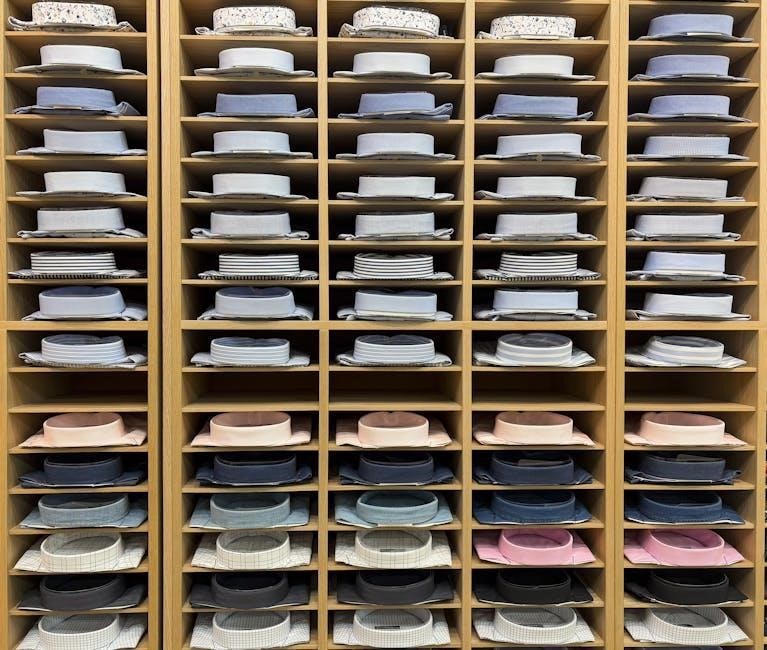
Common problems include a tight neck, sleeves that are too long or short, and shirts gaping at the buttons. Adjustments or exchanges may be necessary for a proper fit.
Shirt Too Tight in the Neck
Experiencing a constricted feeling around the neck indicates the shirt size is likely too small. Measure your neck accurately with a tape measure, ensuring it’s snug but not overly tight. Compare this measurement to the brand’s specific size chart, as neck sizes can vary significantly.
If the shirt feels uncomfortable even after checking the size chart, consider sizing up. Remember that some brands, like O’Neill, are known to run tighter, necessitating a larger size. A collar that’s too tight can restrict movement and appear unflattering. Don’t hesitate to exchange the shirt for a more comfortable fit, prioritizing breathability and ease of wear. Professional tailoring can also offer adjustments, but sizing up initially is often the simpler solution.
Sleeves Too Long or Too Short
Incorrect sleeve length significantly impacts a shirt’s overall appearance. Ideally, sleeves should end at the wrist bone, allowing about half an inch of shirt cuff to extend beyond the jacket sleeve. Measure from the center back of your neck, over your shoulder, and down to your wrist to determine your correct sleeve length.
If sleeves are too long, they appear sloppy and can hinder movement. Too short sleeves look disproportionate and unprofessional. Consult the shirt’s size chart, noting sleeve length measurements in both numerical inches and letter codes. O’Neill’s size charts provide specific sleeve length details. Tailoring is an effective solution for adjusting sleeve length, ensuring a perfect fit.
Shirt Gaping at the Buttons

A common sizing issue is a shirt gaping at the buttons, particularly across the chest. This usually indicates the shirt is too small, straining the button closure. Carefully remeasure your chest circumference and compare it to the manufacturer’s size chart. Consider that brands like O’Neill may run tighter, necessitating a larger size.
If the gap persists even after sizing up, the shirt’s cut might not suit your body shape. Explore different fits – slim, regular, or classic – to find a better match. Professional tailoring can adjust the shirt’s side seams for a more contoured fit, resolving the gaping issue. Always prioritize comfort and a clean appearance.
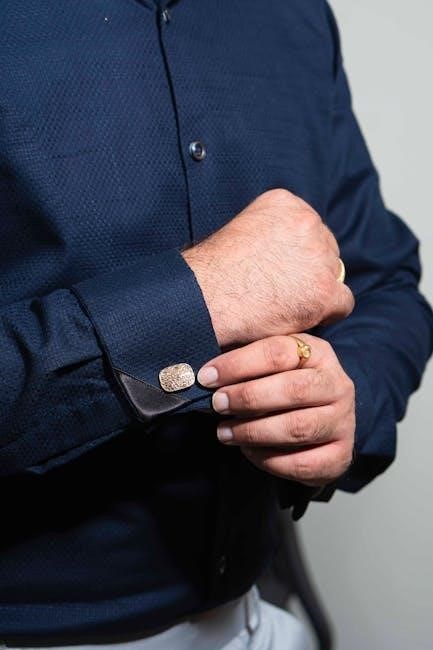
Resources for Further Sizing Assistance
Numerous online size charts and guides are available for detailed measurements. Professional tailoring services offer personalized fittings and adjustments for a perfect shirt fit.
Online Size Charts & Guides
Many retailers provide comprehensive online size charts, detailing measurements for neck, chest, sleeve length, and shoulder width. These charts often include conversions between US, UK, and European sizes, simplifying international purchases. Utilizing these resources is a crucial first step when shopping for dress shirts online, as sizing can vary significantly between brands like O’Neill and others.
Look for charts that specify how measurements should be taken – for example, sleeve length from the center back, or neck circumference. YouTube also hosts helpful videos demonstrating proper measuring techniques. Remember that these charts are general guidelines; always check product-specific measurements listed on the individual shirt’s page for the most accurate fit information. Don’t hesitate to compare charts from different manufacturers to understand their unique sizing approaches.
Professional Tailoring Services
When online sizing proves challenging, or for a truly customized fit, professional tailoring services are invaluable. A skilled tailor can precisely adjust a shirt to your body’s unique measurements, resolving issues like a tight neck, long sleeves, or gaping buttons. This ensures optimal comfort and a polished appearance, elevating your overall style.
Tailors can also advise on the best shirt fit for your body type – slim, regular, classic, or modern – and make alterations accordingly. Investing in tailoring is particularly beneficial for expensive or high-quality shirts, maximizing their longevity and value. Consider this option if standard sizes consistently fail to provide a satisfactory fit, especially with brands exhibiting inconsistent sizing.
No Responses