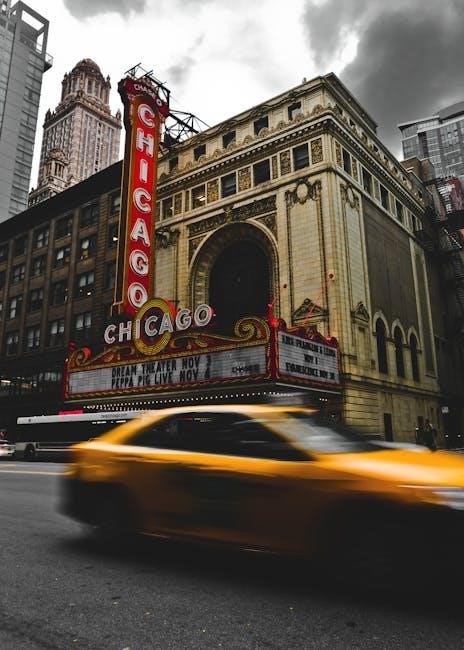
Chicago Street Guide: A Comprehensive Overview
This guide delves into Chicago’s fascinating street system‚ exploring its historical roots and modern layout‚ utilizing resources like Rand McNally maps and historical archives.
Discover the evolution from early trails to the current grid‚ understanding key streets and navigating with invaluable historical map collections online.
Chicago’s street network is a compelling blend of planned design and organic growth‚ reflecting the city’s dynamic history. From its humble beginnings as a portage between the Great Lakes and the Mississippi River‚ the city’s layout evolved alongside its population and economic ambitions.
Initially shaped by Indigenous trails and early settlement patterns‚ the system underwent significant transformations‚ notably after the Great Chicago Fire of 1871. This pivotal event spurred extensive reconstruction and the formalization of a grid system.
Understanding this system requires recognizing the influence of historical maps‚ like those produced by Rand McNally‚ and resources such as the University of Illinois’ online historical map collections. These tools offer invaluable insights into the city’s evolving streetscape and the stories embedded within its thoroughfares.
Historical Development of Chicago Streets
Chicago’s streets trace a path from Indigenous trails and early settlements‚ through the transformative period following the Great Fire‚ shaping its current form.
Early Trails and Settlement Patterns (Pre-1800s)
Before the formal establishment of Chicago‚ the area was a network of Indigenous trails‚ vital for trade and movement. These pathways‚ utilized by various tribes‚ predated European settlement and dictated early travel routes. Albert Schrafs’ 1804 map vividly illustrates these trails and the surrounding villages established by early settlers‚ marking a pivotal moment in the region’s history.
These trails weren’t simply paths; they were integral to the lives of those who inhabited the land‚ connecting communities and facilitating resource exchange. The landscape itself – rivers‚ marshes‚ and elevated terrain – heavily influenced the development of these routes. Understanding these pre-1800s patterns is crucial for comprehending the foundational layers upon which Chicago’s street system was eventually built‚ revealing a rich history before the grid.
The Kinzie Map and Initial Street Layout (Early 19th Century)
The earliest documented map of Chicago‚ created by John Kinzie in the early 19th century‚ represents a foundational step in the city’s urban planning. Considered the first map of the area‚ it meticulously depicted the fledgling settlement and its surrounding landscape‚ offering a glimpse into the city’s nascent form. This map‚ carefully reproduced for historical accuracy‚ showcases the initial layout and the rudimentary street patterns emerging during that period.
As one of Chicago’s earliest settlers‚ Kinzie’s map provides invaluable insight into the city’s origins. It illustrates the placement of key buildings‚ waterways‚ and the evolving network of streets‚ laying the groundwork for future development. Studying this map reveals how the initial street layout responded to the natural environment and the needs of the growing community‚ marking a crucial stage in Chicago’s urban evolution.
The Great Chicago Fire and Subsequent Reconstruction
The devastating Great Chicago Fire of 1871 dramatically reshaped the city’s landscape and‚ consequently‚ its street system. The fire’s immense destruction necessitated a complete overhaul of the urban infrastructure‚ presenting an opportunity for modernization and improved planning. Reconstruction efforts prioritized wider streets and more robust building materials‚ aiming to prevent similar catastrophes in the future.
This period witnessed significant alterations to the street layout‚ with a focus on creating a more organized and efficient grid. The rebuilding process incorporated new street numbering systems and standardized street widths‚ contributing to a more navigable city. The fire‚ while tragic‚ ultimately spurred a period of innovation and progress in Chicago’s urban development‚ fundamentally altering its streetscape for generations to come.

Understanding Chicago’s Grid System
Chicago’s grid is based on a North-South‚ East-West division‚ with State Street as a crucial dividing line for addressing and navigation throughout the city.
The North-South and East-West Division
Chicago’s remarkably logical street layout stems from a foundational North-South and East-West division. Streets running parallel to Lake Michigan generally follow a North-South orientation‚ while those perpendicular to the lake run East and West. This system‚ while seemingly simple‚ allows for relatively easy navigation once understood.

The origin of this grid dates back to the city’s reconstruction following the Great Chicago Fire‚ aiming for order and efficiency. Numbered streets run East and West‚ increasing as one moves further from the Chicago River. Avenues‚ generally running North and South‚ are similarly numbered‚ increasing westward from State Street. This consistent pattern facilitates pinpointing locations across the vast urban landscape.
However‚ exceptions and historical anomalies exist‚ adding layers of complexity to the system‚ but the core grid remains a defining characteristic of Chicago’s urban planning.
Street Numbering System Explained
Chicago’s street numbering system is designed around the Chicago River as its central point of origin. Addresses increase incrementally as you move away from this geographical anchor. North and South addresses are determined by distance from the river‚ with even numbers on one side and odd numbers on the other.
East and West addresses follow a similar principle‚ increasing with distance from State Street. This system‚ formalized in the early 20th century with guides like Rand McNally’s‚ aimed to simplify navigation in the rapidly expanding city. Blocks are generally 100 numbers per mile‚ allowing for approximate location estimation.
Understanding this logic is crucial for navigating Chicago; however‚ variations and historical quirks exist‚ requiring occasional reliance on maps and local knowledge.
The Role of State Street as a Dividing Line
State Street historically and presently functions as a crucial meridian within Chicago’s street layout. It serves as the primary dividing line for addresses‚ influencing both east-west and north-south numbering systems. Addresses west of State Street generally increase numerically as you move further west‚ while those east of State Street increase moving eastward.
Originally‚ State Street’s significance stemmed from its central location and role in the city’s early development. The street’s prominence solidified its position as the zero point for address allocation.
This convention simplifies orientation and remains a fundamental aspect of understanding Chicago’s urban geography‚ even with the city’s complex evolution.

Key Chicago Streets and Neighborhoods
Explore iconic Chicago streets like the Magnificent Mile‚ Wacker Drive‚ and the Loop‚ each representing unique facets of the city’s culture and commerce.
These areas showcase Chicago’s architectural grandeur and vibrant urban life‚ essential for any street guide.
Magnificent Mile (North Michigan Avenue)
North Michigan Avenue‚ famously known as the Magnificent Mile‚ stands as a premier commercial district and a globally recognized shopping destination within Chicago. Stretching roughly from the Chicago River to Oak Street‚ this vibrant stretch boasts an impressive collection of high-end retailers‚ luxury hotels‚ and renowned restaurants.
Historically‚ the area transformed significantly in the mid-20th century‚ evolving from a residential district to the bustling commercial hub it is today. Its name‚ coined in the 1940s‚ reflects its upscale character and appeal. The avenue’s architectural diversity‚ featuring landmark buildings and modern skyscrapers‚ adds to its allure.
Visitors can experience world-class shopping‚ fine dining‚ and cultural attractions‚ making the Magnificent Mile a cornerstone of Chicago’s tourism and a vital component of any comprehensive street guide.
Wacker Drive and the Chicago River
Wacker Drive‚ a vital artery of Chicago‚ uniquely parallels the south bank of the Chicago River through the heart of the city. Its construction in the early 20th century was a monumental engineering feat‚ effectively separating the river from city streets and mitigating flooding risks. The drive offers stunning architectural views‚ showcasing Chicago’s iconic skyline.
The Chicago River itself has undergone a dramatic transformation‚ reversing its flow in 1900 to improve sanitation and facilitate commerce. Today‚ it’s a focal point for architectural boat tours‚ recreational activities‚ and picturesque riverside walks.
Wacker Drive and the Chicago River are inextricably linked‚ representing both the city’s industrial past and its modern vibrancy‚ making them essential elements in understanding Chicago’s streetscape.
The Loop: Chicago’s Central Business District
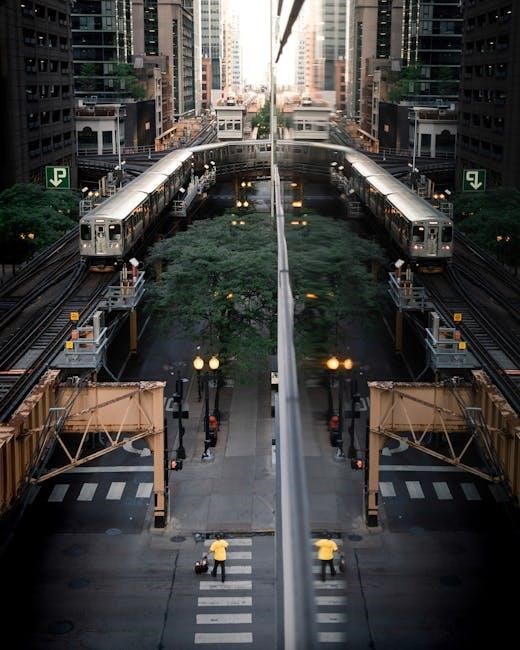
The Loop‚ Chicago’s vibrant central business district‚ derives its name from the elevated train tracks that loop around its core. Historically‚ it emerged as the city rebuilt after the Great Chicago Fire‚ becoming a hub for commerce‚ finance‚ and culture. State‚ Lake‚ Wabash‚ and Dearborn Streets form its primary boundaries‚ creating a dense network of activity.
This area boasts iconic architecture‚ including the Willis Tower and the Chicago Cultural Center‚ alongside theaters‚ restaurants‚ and retail spaces. The Loop’s grid system‚ while complex‚ facilitates efficient navigation for both residents and visitors.
Today‚ The Loop continues to evolve‚ blending historical landmarks with modern developments‚ solidifying its position as Chicago’s economic and cultural heart.

Navigating Chicago with Historical Maps
Explore Chicago’s past using Rand McNally guides and Sanborn Fire Insurance maps‚ now accessible online‚ revealing street layouts and changes over time.
These resources offer unique insights into the city’s development and aid in understanding its current streetscape.
Rand McNally Street Guides (Early 20th Century)
Rand McNally emerged as a pivotal publisher of Chicago street maps during the early 1900s‚ becoming synonymous with urban navigation. Their “New Street Number Guide Map of Chicago‚” from 1910‚ exemplifies this era‚ offering detailed street layouts and‚ crucially‚ the burgeoning street numbering system.
These guides weren’t merely cartographic tools; they were essential for a rapidly growing city experiencing significant population shifts and infrastructural changes. Rand McNally’s maps helped residents and visitors alike decipher the increasingly complex urban landscape.
The detailed indexes within these guides allowed users to quickly locate streets and understand their relationship to the broader city grid. They represent a crucial snapshot of Chicago’s urban form during a period of dynamic transformation‚ providing invaluable insights for historians and urban enthusiasts today.
Sanborn Fire Insurance Maps and Their Value
Sanborn Fire Insurance Maps represent an extraordinary resource for understanding historical Chicago‚ extending far beyond their original purpose. Created to assess fire risk for insurance companies‚ these detailed maps depict building footprints‚ construction materials‚ and even the use of each structure.
For street history researchers‚ they offer a granular view of urban development‚ revealing changes in building density‚ streetscapes‚ and land use over time. The University of Illinois Historical Maps Online project provides digital access to these invaluable records.
Beyond architectural details‚ Sanborn maps illuminate social and economic patterns‚ showcasing the evolution of neighborhoods and the impact of events like the Great Chicago Fire on the city’s physical fabric. They are essential for reconstructing Chicago’s past.
Accessing Online Historical Map Collections
Fortunately‚ numerous online resources now provide access to Chicago’s rich cartographic history. The University of Illinois Historical Maps Online project stands out‚ offering a vast digital collection of topographic and Sanborn Fire Insurance maps‚ readily searchable and viewable;
David Rumsey Map Collection also hosts a selection of historical Chicago maps‚ providing high-resolution images and interactive viewing options. These platforms allow researchers and enthusiasts to explore the city’s evolution from the comfort of their homes.
Further exploration can be found through various library archives and digital repositories‚ unlocking a treasure trove of information about Chicago’s streets and neighborhoods throughout the years. These collections are vital for understanding the city’s past.

Street Name Changes and Evolution
Chicago’s street names reflect its dynamic history‚ with documented changes compiled as early as 1948‚ influenced by urban development and evolving city needs.
Documented Street Renaming History
Chicago’s documented street renaming history reveals a fascinating narrative of urban change and commemorative practices. William Martin’s 1948 compilation provides a valuable record of these alterations‚ showcasing how streets adapted to the city’s growth.
For example‚ “A Street” from 1400 to 1500 West underwent a transformation‚ while “A Avenue‚” spanning 11400 to 11950 South‚ became State Line Road. These changes weren’t arbitrary; they often reflected shifts in land use‚ population demographics‚ or honored prominent figures.
Further research into city archives and historical records unveils a more comprehensive picture of these street name evolutions‚ demonstrating Chicago’s ongoing process of self-definition and memorialization through its urban landscape.
Impact of Urban Development on Street Names
Chicago’s relentless urban development has profoundly impacted its street names‚ reflecting the city’s dynamic growth and evolving priorities. As neighborhoods expanded and transformed‚ existing street names often proved inadequate or needed adjustment to accommodate new infrastructure.

The expansion of the grid system‚ coupled with the construction of major thoroughfares like Wacker Drive‚ necessitated renaming or extending streets to align with the changing urban fabric; New subdivisions and commercial areas frequently adopted names reflecting developers’ visions or local landmarks.
Furthermore‚ commemorative naming practices‚ influenced by political and social trends‚ contributed to the evolution of street names‚ honoring individuals and events significant to Chicago’s history and identity.

Resources for Chicago Street Information
Explore the University of Illinois’ online historical map collection and the Chicago History Museum archives for invaluable insights into the city’s street evolution.
These resources offer digitized maps and historical documents‚ aiding research and understanding of Chicago’s urban landscape.
University of Illinois Historical Maps Online
The University of Illinois’ Historical Maps Online project provides a remarkable digital repository of topographic and other maps crucial for understanding Chicago’s street development. This invaluable resource allows researchers and enthusiasts to access a vast collection of digitized maps spanning various periods‚ offering a visual chronicle of the city’s growth.
Users can explore maps detailing street layouts‚ neighborhood boundaries‚ and infrastructural changes over time; Notably‚ the project includes digitized Sanborn Fire Insurance Maps‚ which are exceptionally detailed and reveal building footprints‚ construction materials‚ and even business types along Chicago’s streets.
These maps are essential for tracing street name changes and understanding the impact of urban development. The online platform facilitates easy navigation and searching‚ making it a cornerstone resource for anyone studying Chicago’s urban history and street system.
Chicago History Museum Archives
The Chicago History Museum Archives serve as a vital repository for primary source materials related to the city’s street system and urban development. Within its collections‚ researchers can uncover a wealth of information‚ including original maps‚ photographs‚ and documents detailing the evolution of Chicago’s streets.
These archives hold records pertaining to street name changes‚ infrastructure projects‚ and the impact of significant events like the Great Chicago Fire on the city’s layout. Researchers can access materials related to the Kinzie Map‚ early settlement patterns‚ and the subsequent reconstruction efforts.
The museum’s holdings offer unique insights into the historical context surrounding Chicago’s street grid and the development of its iconic neighborhoods. Accessing these resources provides a deeper understanding of the forces that shaped the city’s urban landscape.
No Responses