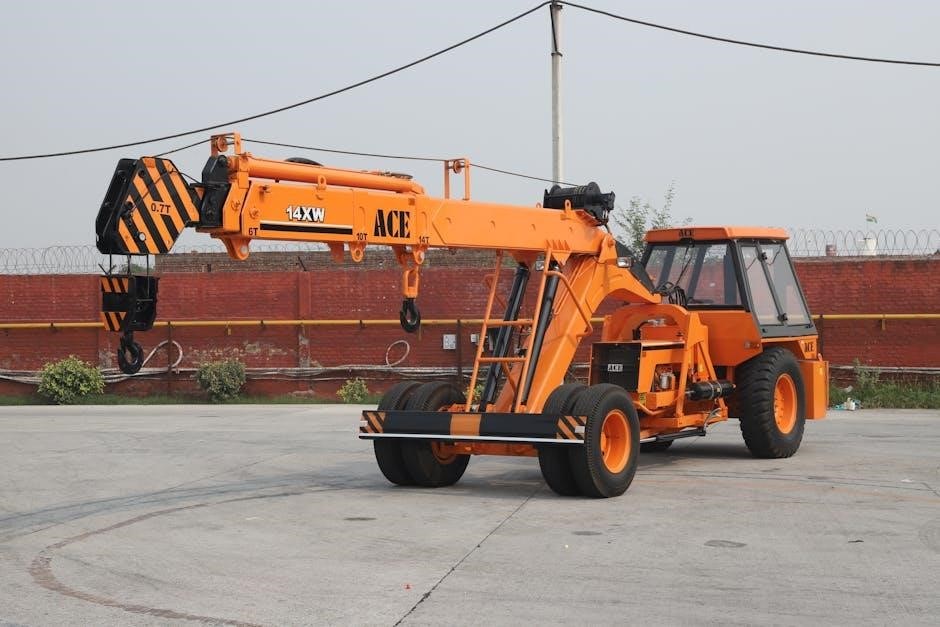
Crane manuals are comprehensive guides detailing the safe operation‚ maintenance‚ and troubleshooting of these powerful machines‚ ensuring longevity and preventing accidents․
What is a Crane Manual?
A crane manual‚ often referred to as an operator’s manual or technical documentation‚ is a detailed‚ manufacturer-provided resource specifically for a particular crane model․ It’s far more than just operating instructions; it’s a complete reference encompassing every aspect of the machine’s lifecycle․
These manuals contain crucial information regarding the crane’s specifications – weight capacities‚ dimensions‚ and operational limits․ They meticulously outline pre-operational inspection checklists‚ step-by-step operating procedures‚ and detailed maintenance schedules․ Furthermore‚ a crane manual serves as a vital troubleshooting guide‚ assisting technicians in diagnosing and resolving mechanical or electrical issues․
Essentially‚ it’s the definitive source of truth for anyone involved with the crane – operators‚ maintenance personnel‚ inspectors‚ and even owners – ensuring safe‚ efficient‚ and compliant operation throughout its service life․ Ignoring the manual can lead to serious consequences․
Why are Crane Manuals Important?
Crane manuals are fundamentally important for safety․ They provide critical guidance on operating procedures‚ load limits‚ and potential hazards‚ minimizing the risk of accidents and injuries․ Compliance with industry regulations and safety standards is heavily reliant on adhering to manufacturer’s instructions found within these documents․
Beyond safety‚ manuals maximize crane lifespan and efficiency․ Proper maintenance‚ as detailed in the manual‚ prevents costly repairs and downtime․ Understanding the crane’s specific components and their functions‚ as outlined‚ allows for optimized performance and reduced wear and tear․
Finally‚ manuals are essential for legal and insurance purposes․ Demonstrating adherence to manufacturer guidelines can be crucial in the event of an incident or inspection․ They represent a commitment to responsible operation and maintenance‚ protecting both personnel and assets․

Types of Cranes & Corresponding Manuals
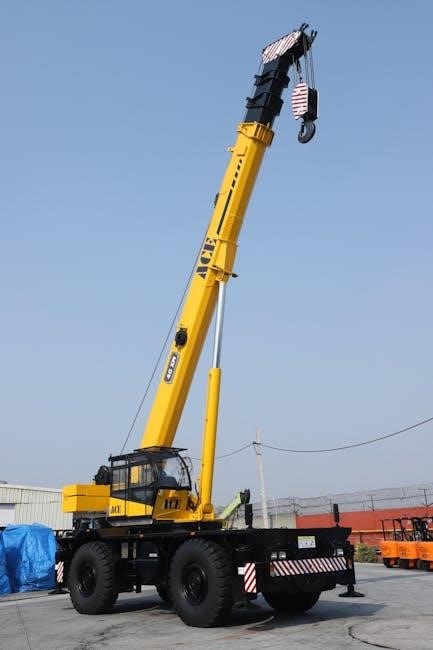
Crane manuals vary significantly based on the crane type – mobile‚ tower‚ or overhead – each requiring specialized documentation for safe and effective utilization․
Mobile Cranes ⸺ Manual Focus
Mobile crane manuals prioritize road travel regulations‚ outrigger setup‚ and load chart comprehension due to their frequent relocation and varied operational environments․ These guides extensively cover pre-operation inspections‚ focusing on tire pressure‚ fluid levels‚ and structural component checks․
A significant portion details boom extension and retraction procedures‚ emphasizing proper pin alignment and safety locking mechanisms․ Manuals also dedicate sections to swing radius calculations‚ ensuring clearance from obstacles and personnel․ Detailed instructions for operating different lift modes – including telescopic and lattice boom configurations – are provided․
Furthermore‚ mobile crane manuals thoroughly explain the use of auxiliary hoists‚ counterweight configurations‚ and the importance of ground stabilization․ They often include specific guidance for operating on uneven terrain and in adverse weather conditions‚ stressing the need for reduced capacity and increased caution․
Tower Cranes ⸺ Manual Specifics
Tower crane manuals heavily emphasize assembly and disassembly procedures‚ detailing precise sequences for mast erection‚ jib installation‚ and counterweight attachment․ These guides provide comprehensive instructions for climbing mechanisms‚ slewing unit operation‚ and hoist trolley movement‚ crucial for vertical construction projects․
A key focus is wind load management‚ with detailed charts outlining permissible lifting capacities based on wind speed and direction․ Manuals also cover tie-in procedures to the building structure‚ ensuring stability during construction․ They dedicate significant space to explaining the function and maintenance of anti-collision systems‚ vital in congested urban environments․
Furthermore‚ tower crane manuals include detailed information on operator cabin controls‚ emergency descent procedures‚ and regular inspections of critical components like ropes‚ bearings‚ and brakes․ Specific attention is given to lightning protection systems and grounding requirements for safe operation․
Overhead Cranes ⸺ Manual Details
Overhead crane manuals prioritize runway and bridge beam inspection protocols‚ detailing checks for structural integrity and alignment․ They provide extensive guidance on hoist mechanisms – wire rope‚ chain‚ or synthetic – covering inspection‚ lubrication‚ and replacement procedures․ Manuals thoroughly explain trolley travel operation‚ including speed control and braking systems․
A significant portion focuses on power supply systems‚ detailing electrical safety procedures‚ wiring diagrams‚ and troubleshooting common electrical faults․ Manuals emphasize the importance of limit switch functionality‚ ensuring safe travel limits are maintained․ They also cover the proper use of pendant controls and remote operation systems․
Furthermore‚ overhead crane manuals include detailed load testing procedures‚ outlining methods for verifying lifting capacity and ensuring compliance with safety standards․ Specific attention is given to preventative maintenance schedules for gears‚ motors‚ and control systems‚ maximizing operational lifespan․
Key Sections Found in a Crane Manual
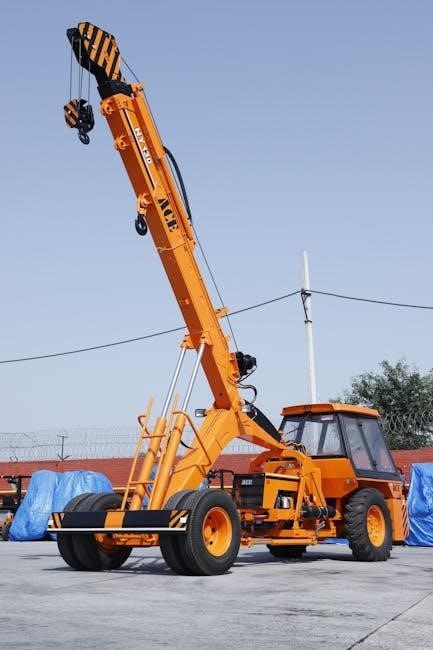
Crane manuals consistently feature safety guidelines‚ operational instructions‚ maintenance routines‚ troubleshooting advice‚ load capacity charts‚ and detailed component diagrams for clarity․
Safety Precautions & Warnings
Crane manuals dedicate significant space to safety‚ outlining crucial precautions to prevent accidents and injuries․ These sections detail proper personal protective equipment (PPE) requirements‚ including hard hats‚ safety glasses‚ and high-visibility clothing․
Warnings regarding load limits‚ ground conditions‚ and proximity to power lines are prominently displayed․ Manuals emphasize the importance of pre-operational inspections‚ covering checks of hooks‚ cables‚ brakes‚ and safety devices․
Detailed instructions on rigging practices‚ signaling protocols‚ and emergency shutdown procedures are provided․ Operators are cautioned against exceeding rated capacities‚ improper load handling‚ and unauthorized modifications․ The manual stresses the need for qualified and trained personnel only‚ highlighting the dangers of unqualified operation․ Ignoring these warnings can lead to catastrophic failures and severe consequences․
Operational Procedures ― Step-by-Step
Crane manuals provide detailed‚ sequential instructions for all operational phases‚ beginning with pre-start checks – verifying fluid levels‚ control functionality‚ and safety device engagement․ Lifting procedures are broken down into clear steps: attaching the load‚ slowly raising it‚ maneuvering to the destination‚ and carefully lowering it․
The manual outlines proper signaling techniques between the operator and riggers‚ emphasizing standardized hand signals or radio communication․ Specific guidance is given for different lift types‚ such as blind lifts or lifts in confined spaces․
Shutdown procedures are equally detailed‚ covering parking the crane‚ securing the load‚ and disconnecting power sources․ These step-by-step guides ensure consistent and safe operation‚ minimizing the risk of errors and maximizing efficiency․ Following these procedures is paramount for operator safety and equipment preservation․
Maintenance Schedules & Procedures
Crane manuals dedicate significant sections to preventative maintenance‚ outlining schedules based on operating hours or calendar intervals․ These schedules detail tasks like daily inspections – checking for leaks‚ damage‚ and wear – alongside more extensive periodic maintenance․
Procedures cover lubrication points‚ filter replacements (oil‚ air‚ fuel‚ hydraulic)‚ and inspection of critical components like wire ropes‚ brakes‚ and hoisting mechanisms․ Torque specifications for bolts and fasteners are clearly provided․ The manual will also specify the type of oil and fluids required for optimal performance․
Detailed instructions guide technicians through complex procedures like boom alignment and load testing․ Adhering to these schedules and procedures extends the crane’s lifespan‚ reduces downtime‚ and ensures continued safe operation‚ preventing costly repairs and potential accidents․

Understanding Crane Manual Diagrams
Crane manuals utilize detailed diagrams – load charts‚ component illustrations‚ and schematics – to visually convey complex information‚ aiding comprehension and safe operation․
Load Charts & Capacity Tables
Crane manuals dedicate significant space to load charts and capacity tables‚ as these are critical for safe lifting operations․ These charts aren’t simply about the maximum weight a crane can lift; they detail capacity reductions based on numerous factors․
Key variables include boom length‚ boom angle‚ operating radius‚ and the crane’s configuration – outrigger setup‚ counterweight used‚ and even wind speed․ Understanding these charts requires careful attention to detail․ They are typically presented in graphical format‚ making it easier to quickly determine the allowable load for a specific lift scenario․
Capacity tables often provide specific lifting capacities for various boom positions and configurations․ Crane operators must consult these charts before every lift to ensure they are not exceeding the crane’s rated capacity‚ preventing potential structural failure and accidents․ Misinterpreting these charts is a leading cause of crane-related incidents․
Component Illustrations & Identification
Crane manuals extensively utilize detailed component illustrations and identification guides․ These aren’t merely visual aids; they are essential for accurate parts ordering‚ effective maintenance‚ and precise troubleshooting․ Each illustration typically features exploded views‚ showcasing how individual components fit together within the larger system․
Parts are clearly labeled with unique identification numbers‚ cross-referenced with a comprehensive parts list elsewhere in the manual․ This system allows technicians to quickly pinpoint the exact component needed for repair or replacement‚ minimizing downtime․ Illustrations cover everything from major structural elements like the boom and chassis‚ to smaller parts like pins‚ bolts‚ and seals․
Proper identification is crucial; using the wrong part can lead to malfunction or even safety hazards․ Crane operators and maintenance personnel should familiarize themselves with these illustrations to understand the crane’s anatomy and facilitate efficient repairs․
Wiring Diagrams & Electrical Schematics
Crane manuals dedicate significant sections to wiring diagrams and electrical schematics‚ vital for diagnosing and resolving electrical issues․ These diagrams aren’t simply maps of wires; they represent the complex network powering the crane’s functions – from hoisting and slewing to safety interlocks and control systems․
Schematics use standardized symbols to represent components like motors‚ relays‚ sensors‚ and controllers‚ illustrating their connections and relationships․ Color-coding is often employed to differentiate circuits and aid in tracing signal paths․ Understanding these diagrams requires a basic knowledge of electrical principles‚ but the manual’s accompanying explanations can be invaluable․
Incorrect wiring can cause malfunctions‚ damage components‚ or compromise safety features․ Technicians rely on these schematics to identify short circuits‚ open circuits‚ and faulty components․ Always disconnect power before working on electrical systems‚ and consult the manual for specific safety precautions․

Troubleshooting with Your Crane Manual
Crane manuals provide systematic guidance for diagnosing problems‚ offering solutions to common malfunctions‚ and ensuring efficient repairs while prioritizing operator safety․
Common Issues & Solutions
Crane manuals frequently dedicate sections to resolving typical operational challenges․ Hydraulic system failures‚ often stemming from leaks or low fluid levels‚ are addressed with troubleshooting steps like inspecting hoses and replenishing fluids․ Electrical problems‚ such as blown fuses or faulty wiring‚ are covered with guidance on circuit testing and component replacement․
Mechanical issues‚ including brake malfunctions and gear wear‚ are detailed with instructions for adjustment or part substitution․ The manual will often include diagnostic flowcharts to pinpoint the source of the problem efficiently․ Solutions range from simple tightening of connections to complex component overhauls․ Always refer to the manual’s specific recommendations for your crane model‚ prioritizing safety and proper procedure to avoid further damage or injury․ Ignoring these guidelines can lead to costly repairs and potential hazards․
Error Code Interpretation
Crane manuals provide crucial decoding of error codes displayed by the crane’s control system․ These codes‚ often alphanumeric‚ signal specific malfunctions within the machinery․ The manual dedicates sections to listing each code and its corresponding description‚ ranging from minor sensor faults to critical system failures․
Understanding these codes allows technicians to quickly diagnose problems without extensive guesswork․ The manual doesn’t just list the error; it often details the probable cause‚ potential consequences‚ and recommended corrective actions․ Some manuals categorize errors by severity – warning‚ caution‚ or critical – indicating the urgency of the repair․ Accurate interpretation prevents misdiagnosis and ensures the correct parts are replaced or adjusted․ Ignoring error codes or attempting repairs without understanding them can exacerbate the issue and compromise safety‚ so always consult the manual first․
Emergency Procedures ⸺ Manual Guidance
Crane manuals dedicate significant space to outlining emergency procedures‚ vital for responding to unforeseen events․ These sections detail actions to take during power failures‚ mechanical breakdowns‚ load instability‚ or operator incapacitation․ Clear‚ step-by-step instructions are provided for safely lowering a load‚ securing the crane‚ and evacuating personnel․
Manuals emphasize the importance of emergency stop functionality and explain how to utilize it effectively․ They also cover procedures for contacting emergency services and reporting incidents․ Specific guidance is often given for different emergency scenarios‚ such as rescuing a suspended worker or dealing with a collapsed boom․ Regular review of these procedures by all operators is strongly recommended․ The manual serves as a critical reference point during stressful situations‚ ensuring a coordinated and safe response‚ minimizing potential damage and injury․

Accessing Crane Manuals
Crane manuals are readily available through manufacturer websites‚ specialized online databases‚ and often‚ as physical copies for convenient on-site reference․
Manufacturer Websites & Resources
Crane manufacturers consistently provide the most accurate and up-to-date manuals directly on their official websites․ These resources often feature dedicated sections for documentation‚ searchable by model number and serial number‚ ensuring you locate the precise manual for your specific crane․

Beyond downloadable PDFs‚ many manufacturers now offer interactive digital manuals with enhanced features like zoom capabilities‚ searchable text‚ and even embedded videos demonstrating procedures․ Registration may be required to access these resources‚ but it often unlocks additional benefits like software updates and technical support․
Don’t overlook the support sections of these websites; they frequently contain FAQs‚ troubleshooting guides‚ and contact information for expert assistance․ Utilizing the manufacturer’s official channels guarantees authenticity and access to the latest safety information and operational guidelines for your crane․
Online Databases & Repositories
Crane manuals are frequently archived in specialized online databases and repositories‚ offering a valuable alternative when direct manufacturer access is limited․ These platforms often compile documentation from various sources‚ creating a centralized location for locating older or hard-to-find manuals․
However‚ exercise caution when utilizing these resources․ Always verify the document’s authenticity and ensure it corresponds to your crane’s exact model and serial number․ Cross-referencing information with other sources is highly recommended․ Some repositories may require a subscription or offer manuals for a fee․
Popular options include industry-specific forums and document-sharing websites‚ but prioritize reputable platforms known for accuracy․ Remember that manufacturer-provided manuals remain the gold standard‚ and these databases should be considered supplementary resources․
Physical Manual Storage & Organization
Crane manuals‚ even in the digital age‚ should be maintained in a readily accessible physical format․ Designate a secure‚ dry‚ and clearly labeled storage location‚ away from potential damage or loss․ Consider using binders with protective sleeves to safeguard manuals from wear and tear‚ oil‚ or grease․

Implement a logical organizational system – by crane model‚ serial number‚ or operational category – to facilitate quick retrieval․ A detailed inventory list‚ regularly updated‚ is crucial for tracking manual availability․ Ensure all personnel aware of crane operation know the location of these vital resources․

Regularly inspect physical manuals for damage and replace any deteriorated copies․ Backing up physical copies with digital scans provides an additional layer of security and accessibility․ Proper storage demonstrates a commitment to safety and responsible crane operation․
No Responses