
Starbucks training equips partners with skills, focusing on coffee knowledge, customer service, and operational efficiency; resources like the Kaapi Machines guide are invaluable.
Overview of the Starbucks Experience
Starbucks cultivates a unique “third place” environment – between home and work – fostering community and connection. Barista training emphasizes creating a welcoming atmosphere for every customer, going beyond simply taking orders. This involves mastering personalized service, remembering regular’s preferences, and proactively engaging with guests.
The experience centers around high-quality coffee, expertly prepared beverages, and a consistent brand standard. Training materials, like those potentially found in a Starbucks barista training manual PDF, detail the importance of drink customization and maintaining operational efficiency. Bad Herrenalb’s charm mirrors the desired atmosphere – a comfortable, inviting space. Ultimately, the goal is to deliver a consistently positive and memorable experience, building customer loyalty and brand advocacy.
The Importance of Consistent Training
Consistent training is paramount at Starbucks, ensuring every barista delivers the same high-quality experience, regardless of location. A standardized approach, potentially detailed within a Starbucks barista training manual PDF, guarantees drink consistency and adherence to brand standards. This minimizes errors, reduces waste, and maximizes customer satisfaction.
Regular training, including daily employee training as mentioned in available resources, also fosters skill development and promotes a culture of continuous improvement. Like Kaapi Machines’ consulting services, ongoing education keeps baristas updated on new products, techniques, and customer service best practices. This investment in employees translates to increased efficiency, reduced turnover, and a more engaged workforce, mirroring the dedication found in places like Bad Herrenalb.

Understanding the Starbucks Menu
Starbucks’ extensive menu, covered in training materials like a PDF manual, includes espresso drinks, brewed coffees, teas, and customizable Frappuccino® blended beverages.
Espresso Beverages: Core Recipes
Starbucks barista training meticulously details core espresso recipes, foundational to drink creation; The PDF manual emphasizes precise measurements for espresso shots, steamed milk, and foam. Mastering these basics—Americano, Cappuccino, Latte, Macchiato, and Mocha—is crucial. Training covers standard ratios, ensuring consistency across all beverages.
Baristas learn to build espresso drinks layer by layer, understanding how each component contributes to the final flavor profile. The manual likely includes visual guides and step-by-step instructions. Emphasis is placed on proper espresso extraction, milk texturing, and drink presentation. Kaapi Machines resources complement this, offering deeper insights into espresso fundamentals. Achieving consistent quality relies on adherence to these core recipes.
Brewed Coffee & Tea Varieties
The Starbucks barista training PDF comprehensively covers brewed coffee and tea offerings, extending beyond espresso. It details brewing methods – drip, pour-over, and cold brew – emphasizing grind size and water temperature for optimal extraction. Different coffee roasts (Blonde, Medium, Dark) and their flavor characteristics are explained.
Tea varieties, including black, green, and herbal infusions, receive similar attention, outlining proper steeping times and temperatures. Baristas learn to accurately prepare hot and iced teas, understanding customization options like lemonades and refreshers. The manual likely details brewing ratios and quality control checks. Resources like those from Kaapi Machines can supplement this knowledge, providing deeper insights into coffee and tea preparation techniques, ensuring a consistently high-quality beverage.
Frappuccino® Blended Beverages: Customization

The Starbucks barista training PDF dedicates significant attention to Frappuccino® blended beverages, highlighting their extensive customization options. It details base recipes, including coffee, crème, and mocha bases, and the precise ratios of ice, liquid, and base syrup. Baristas learn to accurately add flavorings – syrups, sauces, and powders – according to standard recipes and customer requests.
The manual emphasizes modifications like alternative milks, extra shots of espresso, and whipped cream adjustments. It likely covers blending techniques to achieve the correct consistency. Understanding ingredient interactions is crucial. Resources from companies like Kaapi Machines can offer supplementary training on blending equipment and ingredient quality, ensuring each Frappuccino® is perfectly tailored and consistently delicious, meeting individual preferences.

Mastering Espresso Extraction
Starbucks’ PDF manual stresses precise grinding, tamping, and “dialing in” espresso; Kaapi Machines resources aid in achieving optimal shot quality and machine upkeep.
Grinding and Tamping Techniques
Starbucks barista training, detailed within their manuals and supplemented by resources like those from Kaapi Machines, emphasizes the critical role of consistent grinding. Achieving the correct grind size – neither too coarse nor too fine – directly impacts extraction quality. The PDF guides illustrate proper grinder calibration and adjustment based on bean type and humidity.
Tamping, equally vital, requires a level, consistent pressure of approximately 30 pounds. Incorrect tamping leads to channeling, uneven extraction, and ultimately, a substandard espresso shot. Training materials demonstrate the proper grip, posture, and technique for achieving a perfectly compressed puck. Consistent practice, guided by the manual’s visual aids, is key to mastering these foundational skills, ensuring beverage consistency and quality.
Dialing In Espresso: Achieving the Perfect Shot
Starbucks’ PDF training materials dedicate significant attention to “dialing in” espresso – the art of adjusting grind size, dose, and tamp pressure to achieve optimal extraction. This process, often detailed in guides like those offered by Kaapi Machines, isn’t a fixed formula but a dynamic response to bean age, humidity, and grinder variations.
Baristas learn to evaluate espresso shots based on visual cues – crema color and thickness – and timing. A properly dialed-in shot typically extracts within 20-30 seconds, yielding a balanced flavor profile. The manual emphasizes iterative adjustments, documenting changes, and tasting frequently. Mastering this skill requires patience, observation, and a commitment to consistently producing high-quality espresso, forming the base of many Starbucks beverages.
Espresso Machine Operation & Maintenance
Starbucks’ barista training manual PDF thoroughly covers espresso machine operation, stressing daily routines for peak performance. This includes proper machine start-up and shut-down procedures, backflushing techniques to remove coffee oils, and regular cleaning of portafilters and group heads. Resources like those from Kaapi Machines often complement this training, offering detailed service insights.
The manual details troubleshooting common issues – low pressure, inconsistent temperature – and emphasizes preventative maintenance. Baristas are trained to identify potential problems early, minimizing downtime and ensuring consistent espresso quality. Regular maintenance isn’t just about machine longevity; it directly impacts beverage taste and customer satisfaction, a core tenet of the Starbucks experience.

Milk Steaming & Latte Art
Starbucks’ training details milk texturing for varied drinks, including microfoam creation; the barista training manual PDF guides basic latte art patterns skillfully.
Texturing Milk for Different Drinks
Starbucks barista training emphasizes achieving optimal milk texture for each beverage, understanding that consistency is paramount. The barista training manual PDF details techniques for creating microfoam – velvety, finely textured milk essential for lattes and cappuccinos. It explains how to properly purge the steam wand, introduce air to stretch the milk, and create a vortex to incorporate it evenly.
Different drinks require varying textures; for example, a macchiato demands a denser, more stable foam, while a flat white needs a very thin, almost liquid microfoam. The manual likely covers adjustments to steaming time and wand positioning to achieve these distinctions. Furthermore, it addresses the importance of milk temperature, aiming for around 150-160°F (65-70°C) to maximize sweetness and prevent scalding. Proper milk texturing significantly impacts the drink’s overall quality and customer experience.

Basic Latte Art Patterns
Starbucks barista training progressively introduces latte art, starting with foundational patterns. The barista training manual PDF likely begins with the “heart” – a classic design achieved by creating a symmetrical pour and then drawing through the center with a tool or the pitcher’s spout; Following this, baristas learn the “rosetta,” a more complex pattern involving wiggling the pitcher during the pour to create a fern-like shape.
Mastering these requires precise control over milk texture and pouring technique. The manual probably details the importance of a consistent microfoam base and a steady hand. It likely emphasizes practice and repetition to develop muscle memory. Beyond the heart and rosetta, baristas may learn tulips and swans. Successful latte art isn’t just aesthetic; it demonstrates skill and elevates the customer’s experience, showcasing the barista’s dedication to craft.
Milk Alternatives & Considerations
The Starbucks barista training manual PDF dedicates significant attention to milk alternatives, reflecting increasing customer demand. Baristas must understand the unique properties of each option – soy, almond, oat, and coconut milk – as they impact texture and flavor. Unlike dairy, these alternatives often require different steaming techniques to achieve optimal microfoam.
The manual likely details how oat milk, for example, often creates a naturally sweeter and creamier texture, while almond milk can be prone to separation. Proper steaming prevents scalding and maintains the alternative’s intended flavor profile. Furthermore, baristas are trained on allergen awareness and preventing cross-contamination. Accurate order taking and clear communication regarding potential differences in taste and texture are crucial for customer satisfaction.

Customer Service & Store Operations

Starbucks’ manual emphasizes positive connections, order accuracy, and efficient POS system usage; these skills ensure a seamless customer experience and smooth store function.
Creating a Positive Customer Connection
Starbucks barista training heavily emphasizes building rapport with customers, moving beyond simply taking orders. The manual details techniques for genuine engagement, including making eye contact, using the customer’s name when possible, and actively listening to their requests.
Partners are taught to personalize the experience, offering recommendations and demonstrating a genuine interest in the customer’s day. This involves understanding non-verbal cues and adapting communication styles accordingly.
The training stresses the importance of resolving customer issues with empathy and efficiency, turning potential negative experiences into opportunities for building loyalty. Creating a welcoming and inclusive atmosphere is paramount, ensuring every customer feels valued and appreciated. Ultimately, the goal is to foster a sense of community within the store.
Order Accuracy & Efficiency
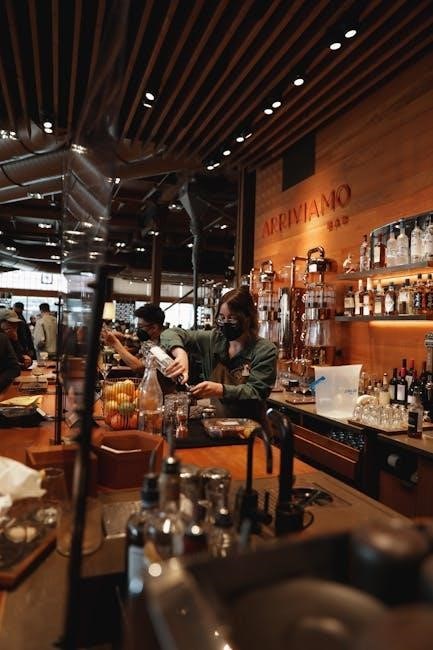
Starbucks training prioritizes precise order taking and swift fulfillment, crucial for customer satisfaction. The manual details a standardized order confirmation process, repeating the order back to the customer to minimize errors. Baristas learn to efficiently navigate the Point of Sale (POS) system, mastering modifiers and customizations.
Workflow optimization is a key component, emphasizing multitasking and station organization. Training covers drink building sequences to streamline preparation and reduce wait times.
Partners are instructed on proper labeling techniques and quality checks before handing off beverages. Efficiency isn’t just about speed; it’s about consistently delivering correct orders with a friendly demeanor. The goal is to balance speed with accuracy, ensuring a positive experience for every customer, even during peak hours.
Point of Sale (POS) System Training
Starbucks’ POS system training is extensive, covering all aspects of transaction processing. New partners learn to accurately input orders, apply discounts, and process various payment methods – including mobile orders and rewards. The manual details navigating the system’s interface, understanding menu categories, and utilizing modifier options for customized drinks.
Training emphasizes efficient cash handling procedures, including opening and closing procedures, and reconciliation techniques. Baristas are taught to troubleshoot common POS errors and escalate issues to supervisors when necessary.
Understanding reporting features and inventory management within the POS is also covered. The goal is to empower baristas to confidently handle transactions, maintain accuracy, and contribute to smooth store operations, ultimately enhancing the customer experience.

Advanced Barista Skills & Coffee Knowledge
Coffee Master certification, detailed in training, involves understanding bean origins, flavor profiles, and troubleshooting drink issues for expert-level Starbucks service.
Coffee Bean Origins & Flavor Profiles
Starbucks barista training delves deeply into the fascinating world of coffee origins, exploring how geographical location and climate dramatically influence bean characteristics. Understanding these nuances is crucial for crafting exceptional beverages and communicating effectively with customers. The curriculum covers key growing regions – Latin America, Africa, and Asia/Pacific – detailing the unique flavor profiles associated with each.
For example, Latin American coffees often exhibit notes of chocolate and nuts, while African beans frequently present bright, citrusy acidity. Asian/Pacific coffees tend towards earthy and full-bodied flavors. Baristas learn to identify these characteristics through cupping sessions and sensory evaluations; This knowledge extends beyond simply brewing; it informs recommendations, customizations, and a deeper appreciation for the artistry of coffee. The Kaapi Machines resource and other training materials emphasize this holistic understanding.
Coffee Master Certification Program
Starbucks’ Coffee Master program represents the pinnacle of barista expertise, a rigorous journey demanding comprehensive coffee knowledge and skillful application. The program, detailed within advanced training materials, isn’t simply about memorization; it’s about demonstrating a genuine passion for coffee and a commitment to the Starbucks experience.
Partners aspiring to become Coffee Masters engage in extensive study, including bean origins, roasting processes, brewing methods, and sensory evaluation. They participate in blind tastings, practice drink building, and are challenged to articulate their understanding to peers and certification panels. The process involves asking other partners about their goals and supporting each other’s development. Successful completion signifies a mastery of coffee artistry and a dedication to elevating the customer experience, as outlined in the training documentation.
Troubleshooting Common Drink Issues
Starbucks barista training emphasizes proactive problem-solving, equipping partners to address frequent drink inconsistencies. The training manual, and supplemental guides like those from Kaapi Machines, detail solutions for issues like weak espresso shots – often stemming from grind size or tamping pressure – and improperly textured milk, impacting latte art and drink mouthfeel.
Partners learn to identify and correct issues with drink temperature, sweetness levels, and ingredient ratios. They’re trained to recognize signs of equipment malfunction, such as an espresso machine needing cleaning or a milk steamer producing inconsistent steam. Effective troubleshooting minimizes waste, ensures consistent quality, and maintains customer satisfaction. The documentation stresses a systematic approach: identify the problem, analyze potential causes, implement a solution, and verify the result.
No Responses